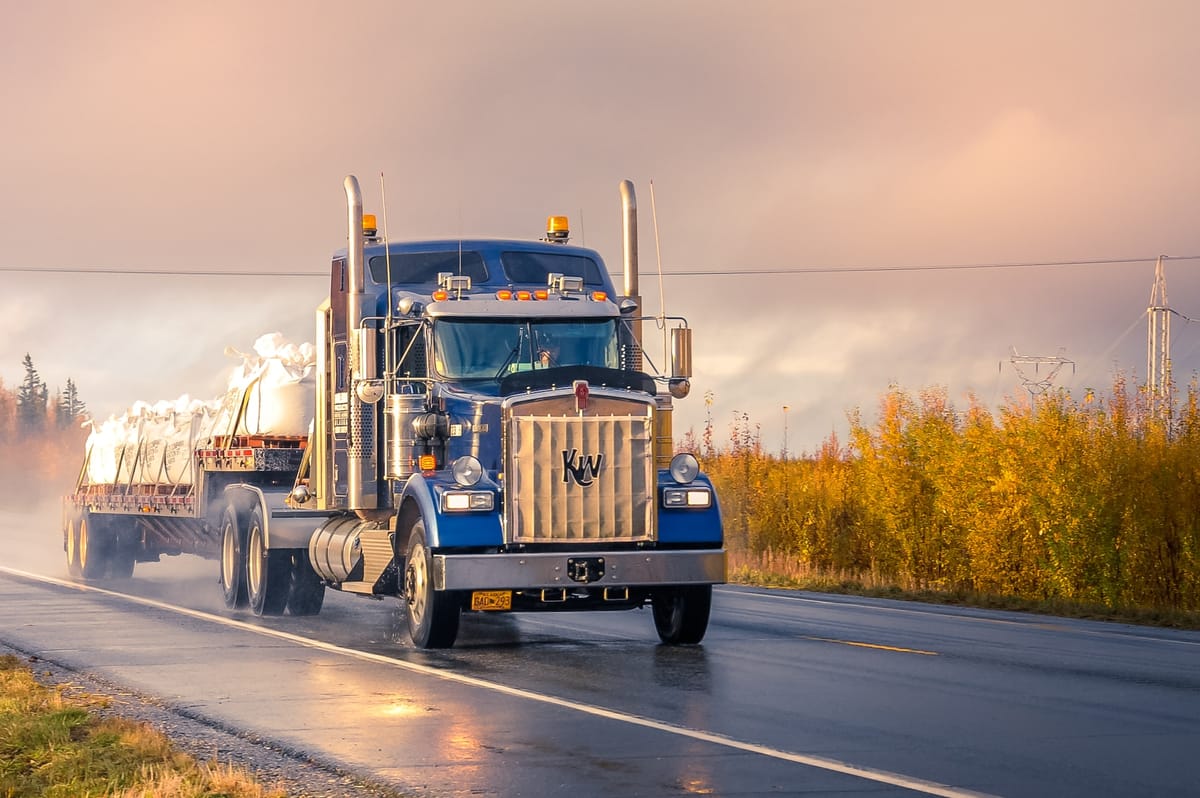
Who runs CDL licensing in Texas
The Texas Department of Public Safety (DPS), Driver License Division, issues commercial driver's licenses and learner permits. You must already hold a valid Texas driver license — the CLP rides on top of it and is not valid without it (it also can't be used as identification). Knowledge tests are taken at DPS driver license offices in a fixed order: Texas Commercial Rules, then General Knowledge, then Combination (Class A), Air Brake if applicable, then endorsements. Skills tests are given at select DPS offices — or by DPS-certified third-party testers (the TPST program), which in Texas may administer both knowledge and skills exams — but only to their own students or employees. Skills scores can even be earned in another state and transmitted to Texas electronically.
The Texas CDL path, step by step
Hold a Texas license and study the DL-7C handbook
Your study source is the official Texas Commercial Motor Vehicle Driver's Handbook (DL-7C), free from DPS. A Spanish edition still exists — as a study aid only, because the tests themselves are no longer offered in Spanish (step 2). You must be 18 or older for a Texas CLP or CDL (Texas-only driving); 21+ is required for interstate commerce.
Pass the knowledge tests — English only, since June 2026
At a DPS office you present proof of U.S. citizenship or lawful presence, proof of identity and your Social Security number (no SSN, no CLP or CDL), take a vision exam, and pay the $25 CLP fee. Then the tests, in the fixed order above. The headline rule: effective June 1, 2026, DPS administers all CDL knowledge examinations exclusively in English — the Spanish versions were discontinued — and all skills tests are in English too. DPS goes further: applicants who cannot demonstrate sufficient English proficiency during testing and issuance are not eligible for a Texas CDL or CLP, tying the policy to the federal English-proficiency rule. Older guides promising a Spanish test in Texas are out of date.
Get your CLP — 180 days, renewable once the easy way
The Commercial Learner's Permit is valid 180 days (or until your Texas driver license expires, if sooner). Renew before it expires and you may renew once without retaking the knowledge exams, for another $25. You must hold the CLP 14 days before the skills test, and when you practice, the CDL holder beside you must be 21 or older and hold the same class of license.
Self-certify and handle the medical — fully electronic now
Texas files your driving type in one of four categories (forms CDL-4, CDL-10 or CDL-5): Category 1 non-excepted interstate (21+, medical certificate required), Category 2 excepted interstate (18+, no certificate, but Texas medical standards still apply), Category 3 non-excepted intrastate (certificate required; state medical exemptions possible on form CDL-37), Category 4 excepted intrastate (grandfathered and specific-activity cases). Since June 23, 2025, certified examiners submit results electronically through the National Registry (NRII) — and from April 10, 2026 Texas accepts no paper medical certificates at all. A certificate is good for at most 24 months; let it expire and the CDL is downgraded. One mercy: if the downgrade happened within the last 12 months and your record is otherwise clean, you can be restored without retaking knowledge or skills exams once a valid certificate posts.
Complete ELDT — training is not needed for the permit, but is verified before the road test
Texas sequences training differently from most states: Entry-Level Driver Training from a provider in FMCSA's Training Provider Registry is not required before the CLP — but DPS queries the Registry and must verify your ELDT completion before administering the skills test, and before the HazMat knowledge test. Texas sets no state minimum hours beyond the federal standard. So the practical order is: permit first, school second, road test last — and your school's paperwork must be in the Registry, not just in your hand, before you can test. How to vet a school is covered in How to Choose a CDL School — and Not Get Scammed.
Take the skills test — mind the 90-day trap
Three parts — Vehicle Inspection, Basic Vehicle Control, Road Test — in a commercial vehicle representative of your permit's class, which you provide. The vehicle must pass a safety check first: current registration, liability insurance and inspection certificate (trailers over 7,500 lbs need their own). DPS uses the modernized AAMVA skills test everywhere except Del Rio and Wichita Falls. Now the trap, straight from DPS form DL-60A: fail the skills test and your application lives for only 90 days from the initial application date — after 90 days, or after three failed tests, you start over with a new application and a new fee. Pass, and you pay the $97 CDL fee for an eight-year license.
What Texas charges: state fees
Texas is cheap and simple — every amount below includes DPS's $1 administrative fee, and DPS charges no separate per-test fees at its own offices:
| Item | Fee |
|---|---|
| Commercial Learner's Permit (CLP) — original or renewal | $25 |
| CDL — new or renewal, age 18–84 (8 years) | $97 |
| CDL with HazMat endorsement — new or renewal (5 years) | $61 |
| CDL — new or renewal, age 85+ (2 years) | $26 |
| Replacement CDL or CLP | $11 |
| Non-domiciled CDL — new or renewal (maximum 1-year term) | $121 |
| Knowledge or skills tests at DPS offices | No separate fee (third-party TPST testers set their own charges) |
Tuition is the real cost: private CDL schools in the U.S. generally charge about $3,000–$10,000 for a Class A program, with many full programs in the $4,000–$7,000 range — plus the DOT medical exam. The full breakdown is in How Much Does CDL Training Cost?
Texas specifics worth knowing
- HazMat runs on a strict order — and fingerprinting comes last. First-time HazMat applicants complete ELDT first, apply at a driver license office (forms CDL-1 and CDL-6), and take the HazMat exam — and may not start fingerprinting until the office application is complete. Fingerprints go vendor → FBI → TSA (TSA's goal is an answer within 30 days). Renewing holders get a 90-day temporary endorsement while TSA works; first-timers get no endorsement until TSA clears them. The endorsement expires with the CDL or 5 years from TSA approval, whichever comes first — and it requires U.S. citizenship or permanent residence.
- Military: a genuine Even Exchange. Under form CDL-3B, qualifying military drivers — active duty or within 12 months of discharge, with at least 2 years operating a representative military CMV and a commanding officer's certification — can exchange that experience for an initial Texas CDL with no knowledge test and no skills test (listed occupations include 88M, 92F, 14T, 2T1, 2F0, 3E2, 3531, EO; School Bus is excluded; the normal CDL fee applies). A skills-only waiver exists too (form CDL-3A).
- Moving to Texas with a CDL: no retesting. Texas regulation waives both knowledge and skills exams for a valid out-of-state CDL transferred like-for-like — same class, restrictions and endorsements — with one exception: HazMat does not transfer clean and runs through the TSA process. You may drive on a valid out-of-state license for up to 90 days after moving to Texas, and your out-of-state conviction history follows you onto the Texas record.
- Myth check: Impact Texas Drivers (ITAD) is not a CDL requirement. The distracted-driving course certificate that regular license applicants need does not appear in any DPS CDL requirement — the CLP already presupposes a Texas driver license. If a school or tester tells you to buy an ITAD course for your CDL test, ask them to show it on a DPS CDL page.
- Some permits are endorsement-specific clocks. For certain endorsements you must hold a CLP carrying that endorsement for at least 14 days before it can be added to your CDL — another reason to decide your endorsements before you apply, not after.
Compare states or read the nationwide sequence in our step-by-step guide to getting a CDL, the California CDL guide and the New York CDL guide.
Training in Texas? We will match you with a registered school
CDL Students USA connects future drivers with FMCSA-registered CDL schools in their area — including, where available, schools with instructors or support in your language. The service is free for students: tell us your Texas city and when you want to start, and a partner school will call you with its program, price and schedule. One caution for Spanish speakers: Texas CDL exams have been English-only since June 1, 2026 — schools can still teach and explain in Spanish, and that help is real, but the state tests themselves are in English.
Sources: Texas DPS — CDL application page (path, English-only banner of June 1, 2026, fixed test order, CLP rules), official DPS fee schedule, form DL-60A (90-day / three-failure skills rule), ELDT page (no CLP prerequisite; TPR verification before skills and HazMat tests), medical certification page (Categories 1–4, NRII electronic filing, paper certificates ending April 10, 2026, downgrade recovery), non-domicile CDL page and DPS press release (September 2025 halt; H-2A-only resumption June 1, 2026; H-2B/E-2 pending; ineligible categories), HazMat endorsement page (process order, 90-day temporary endorsement), third-party testing (TPST) page, forms CDL-3A/CDL-3B (military waivers); Texas Transportation Code §§522.014, 522.027, 522.029; 37 Texas Administrative Code §16.29 (transfer without retesting); FMCSA (non-domiciled final rule, 91 FR 7044). The non-domiciled status is changing — re-confirm on dps.texas.gov before you apply. Texas fees and rules can change.
For CDL schools
CDL Students USA is an independent student referral and marketing partner. We deliver pre-screened applicants who are ready to train in your area — and you pay only for students who enroll and start. No upfront fees, no monthly retainers, no long-term contract.
Partnership inquiries: partners@cdlstudentsusa.com