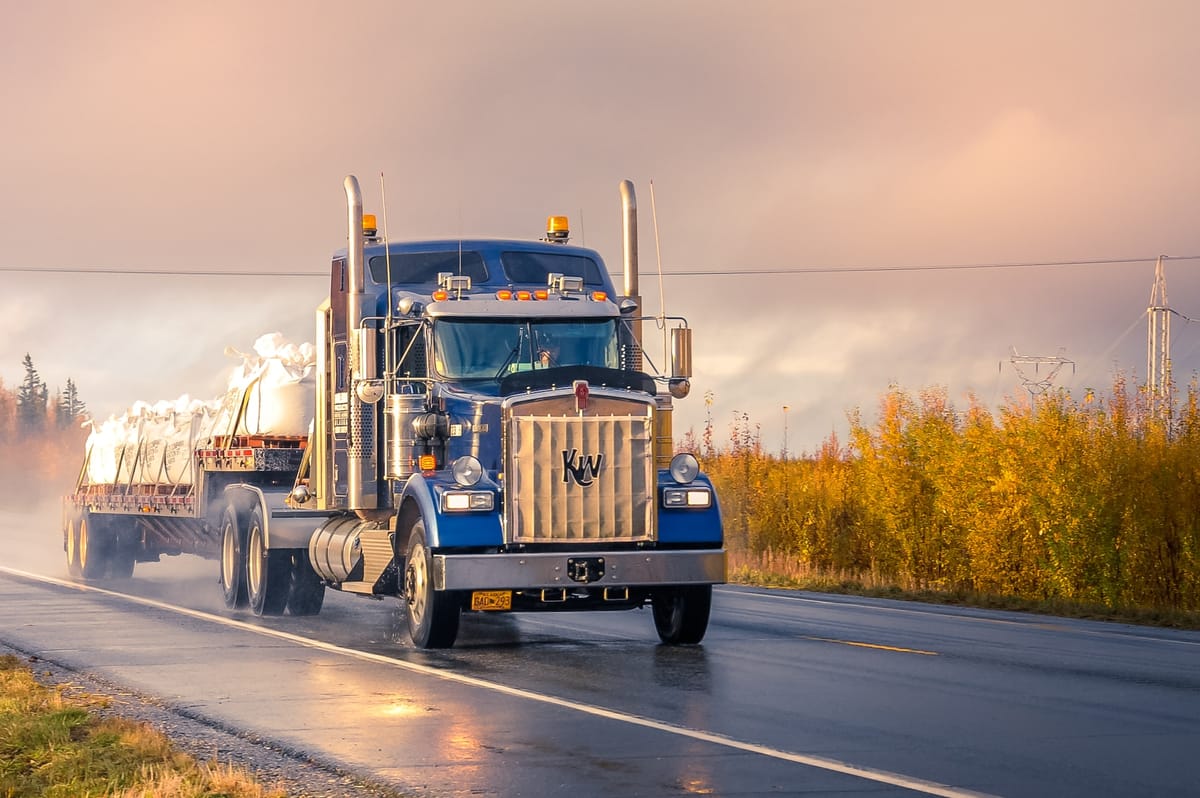
First: which CDL class do you need?
Class A covers combination vehicles — a tractor-trailer (semi) — with a gross combination weight of 26,001 lbs or more. This is the license most long-haul and regional trucking jobs require, and the one most students choose. Class B covers single heavy vehicles such as dump trucks, box trucks and buses. Class C covers smaller vehicles carrying passengers or hazardous materials. If you are not sure, Class A gives you the widest options: it also allows you to drive most Class B and C vehicles.
Check that you are eligible
You must be 21 or older to drive a commercial vehicle across state lines (interstate commerce) — this is a federal rule. Every state also allows CDL holders aged 18–20 to drive within their own state only (intrastate), with a restriction on the license. The HazMat endorsement requires age 21 everywhere.
You also need a valid regular (non-commercial) driver's license, proof of identity and state residency, and a Social Security number. States check your driving record for the past 10 years across all states where you held a license. Serious violations — a DUI, leaving the scene of an accident, using a vehicle in a felony — can disqualify you for a period of time or for life, depending on the offense.
Get your DOT medical certificate
Before you can get a commercial learner's permit, you must pass a medical examination and receive a Medical Examiner's Certificate (the "DOT medical card"). The exam must be performed by a medical examiner listed on FMCSA's National Registry of Certified Medical Examiners — a family doctor who is not on the registry cannot issue it.
The exam checks vision, hearing, blood pressure and overall physical condition. A certificate is valid for up to 24 months; if the examiner wants to monitor a condition such as high blood pressure, it can be issued for a shorter period. Since June 2025, examiners report results electronically to FMCSA and your state, so your medical status is tied to your license record.
Get your CLP — the Commercial Learner's Permit
The CLP lets you practice driving a commercial vehicle on public roads, with a qualified CDL holder sitting beside you. To get one, you go to your state's driver licensing office with your documents and medical certificate and pass the written knowledge tests for the license class and endorsements you want.
Two federal rules matter here:
- You must hold your CLP for at least 14 days before you may take the CDL skills test.
- A CLP is valid for up to one year (your state sets the exact term), so you have time to train — but don't let it expire.
Many students get their CLP before starting school; others prepare for the knowledge tests as part of their school's theory course. Either way works — ask the school which order they recommend. Full detail: What Is a CLP? The Commercial Learner's Permit, Explained.
Complete ELDT training at a registered school
Since February 7, 2022, federal law requires entry-level drivers to complete Entry-Level Driver Training (ELDT) before taking the skills test. This applies if you are getting a Class A or Class B CDL for the first time, upgrading from B to A, or adding a school bus, passenger or HazMat endorsement for the first time.
ELDT has two parts: theory (classroom or online instruction — you must score at least 80%) and behind-the-wheel training on a range and on public roads. Federal rules set the curriculum but no minimum number of hours — you train until your instructor certifies you are proficient. The school then reports your completion to FMCSA's registry, and only then can you schedule the skills test.
Pass the CDL skills test
The skills test has three parts, and you must pass all of them — normally in a vehicle of the class you are licensing for:
- Vehicle Inspection — the pre-trip inspection: you walk around the vehicle, name components and explain what you are checking.
- Basic Vehicle Control — off-road maneuvers on a closed course: straight-line and offset backing, parallel parking, alley docking.
- Road Test — driving in real traffic with an examiner: turns, lane changes, intersections, highway merging, railroad crossings.
Some schools are authorized to test their own students; in other cases you test at a state site or a third-party examiner. Your school will tell you which applies and usually provides the truck for the test.
Receive your CDL — and think about endorsements
After you pass, your state issues your CDL. Endorsements add qualifications later: HazMat (H), Tanker (N), Doubles/Triples (T), Passenger (P) and School Bus (S). Each needs its own knowledge test, HazMat also requires a TSA security threat assessment, and first-time H, P and S endorsements require ELDT. You do not need endorsements to start — many drivers add them in their first year.
How much does it cost, and how long does it take?
There is no official national price — tuition is set by each school. Private CDL schools in the U.S. generally charge between about $3,000 and $10,000 for a Class A program, with many full programs landing in the $4,000–$7,000 range. The price depends on the state, the length of the program, how much one-on-one driving time is included, and whether the truck for the skills test is provided. Community colleges are often cheaper but can have waiting lists; carrier-sponsored programs may cover tuition in exchange for a work commitment — read those contracts carefully, because leaving early can mean repaying the full cost.
On top of tuition, budget for state fees for the permit and license, the medical exam, and testing fees — typically a few hundred dollars in total, varying by state.
A full-time Class A program typically takes about 3 to 8 weeks (around 4 weeks is common). Part-time evening and weekend formats take longer. Add the 14-day CLP holding period and time to schedule your test when you plan your start date.
Full breakdown: How Much Does CDL Training Cost?
State guides: CDL Training in Florida — Florida state fees, residency paperwork and the English-only exam rule. CDL Training in New York — NY DMV fees, test languages and the 7-day ELDT rule. CDL Training in New Jersey — the $125 test receipt, 180-day permit and bring-your-own-truck road test. CDL Training in Illinois — the Secretary of State process, the ELDT scheduling trap and the three-failure rule. CDL Training in Pennsylvania — the Knowledge Test Authorization, prorated fees and the 15-day permit rule. CDL Training in Washington — the state's own 160-hour Class A minimum, four test languages and the examiner system. CDL Training in California — flat $100 fees, six test languages and California's 15-hour behind-the-wheel rule. CDL Training in Texas — the $97 eight-year CDL, English-only testing since 2026 and the 90-day retest trap. CDL Training in Ohio — the year-long TIPIC permit, nine test languages and timed skills tests.
A word about English
Federal rules require commercial drivers to read and speak English well enough to converse with the public, understand road signs and respond to official inquiries — and since June 2025 this requirement has been actively enforced at roadside inspections, where drivers who cannot demonstrate English proficiency can be placed out of service. You do not need perfect English, but basic working English is part of the job. If English is not your first language, a school with instructors who speak your language can make training and test preparation much easier — while you build the English you will need on the road.
Ready to start? We will match you with a registered school
CDL Students USA connects future drivers with FMCSA-registered CDL schools in their area — including schools with Russian- and Ukrainian-language support. The service is free for students: tell us your city and when you want to start, and a partner school will call you with its program, price and schedule.
Sources: FMCSA — driver age and qualification rules (49 CFR 391.11), Entry-Level Driver Training and the Training Provider Registry (fmcsa.dot.gov), Medical Examiner's Certificate and National Registry rules, CDL skills testing standards. State fees, CLP terms and testing procedures vary by state — confirm details with your state driver licensing agency.
For CDL schools
CDL Students USA is an independent student referral and marketing partner. We deliver pre-screened applicants who are ready to train in your area — and you pay only for students who enroll and start. No upfront fees, no monthly retainers, no long-term contract.
Partnership inquiries: partners@cdlstudentsusa.com